

The operating core of creative organisations
Orpheus connects media, projects, people and business operations in a modular, browser-based work and infrastructure platform.
Open portalA working context you can actually see
Orpheus connects modules, organisation, workspace and project as more than an underlying technical model. The interface keeps that shared context visible from the first entry point through day-to-day work.
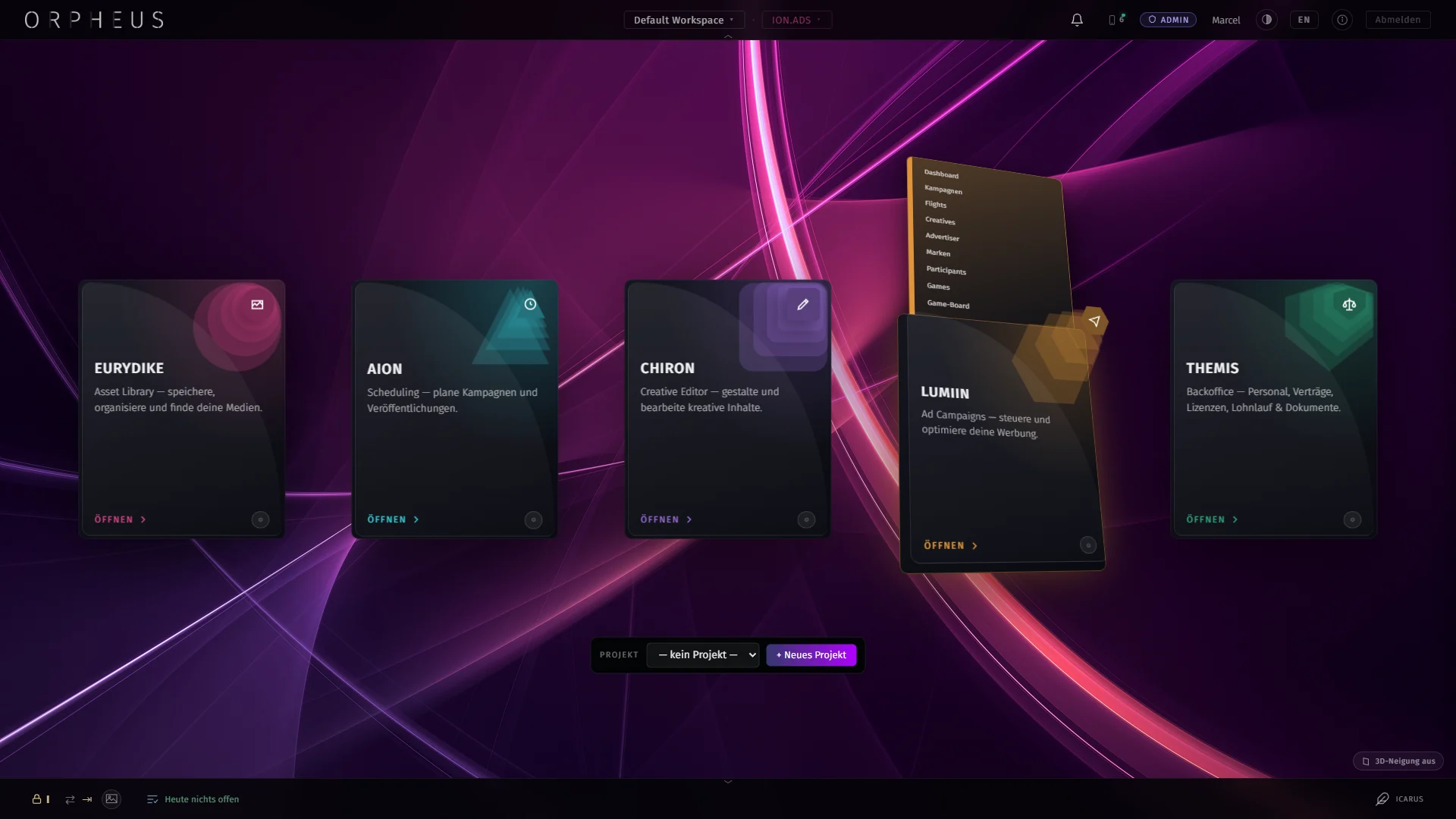
Modules, workspace and project in one entry point
The start portal opens the shared working context: organisation and workspace stay visible while Eurydike, Aion, Chiron, Lumiin and Themis remain directly accessible. The active project context carries into the work that follows.
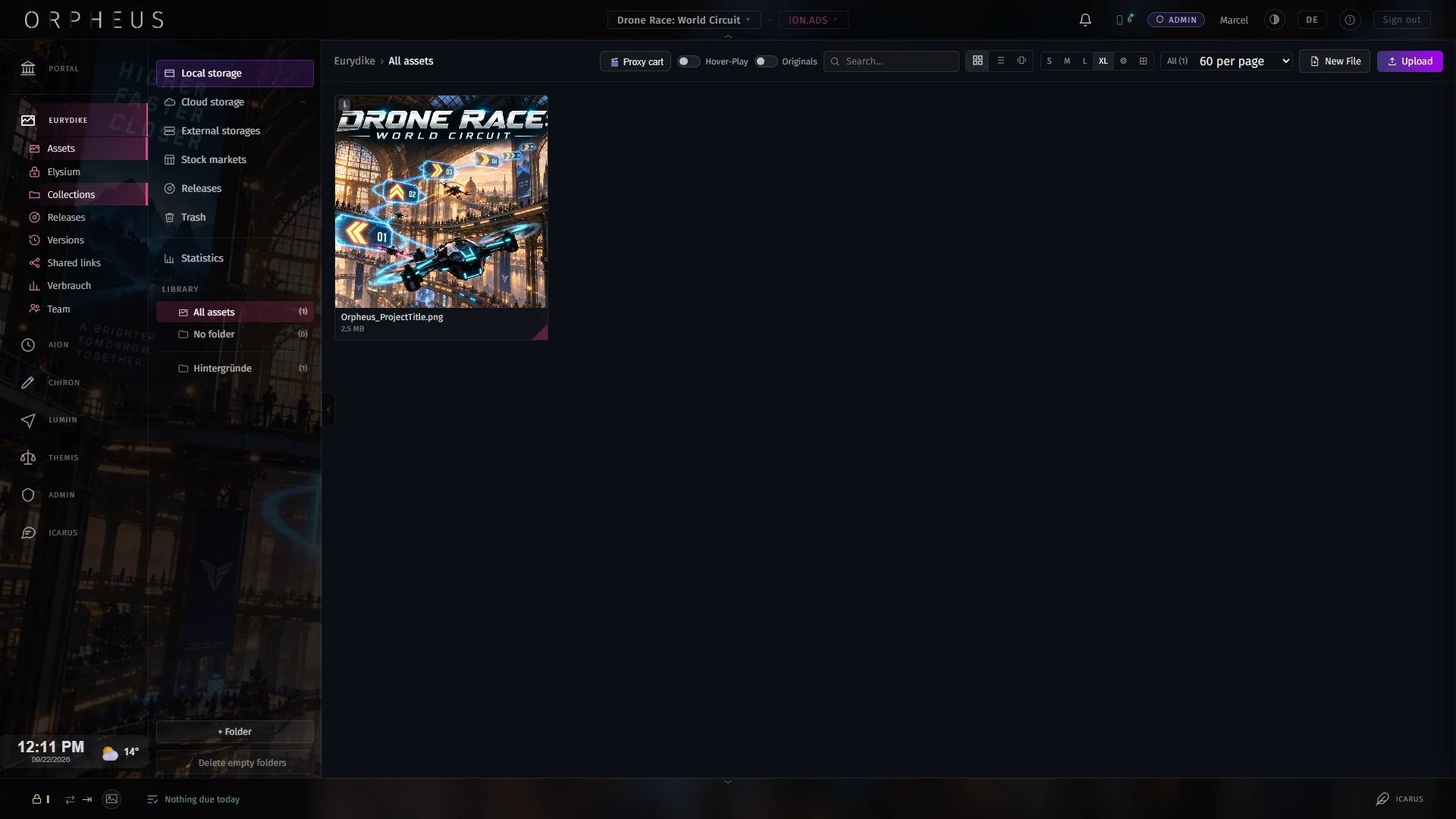
Assets stay connected to the project context
Eurydike brings local, cloud and external storage together and organises media through libraries, collections, releases and versions. Assets remain findable without losing their relationship to the workspace and project.
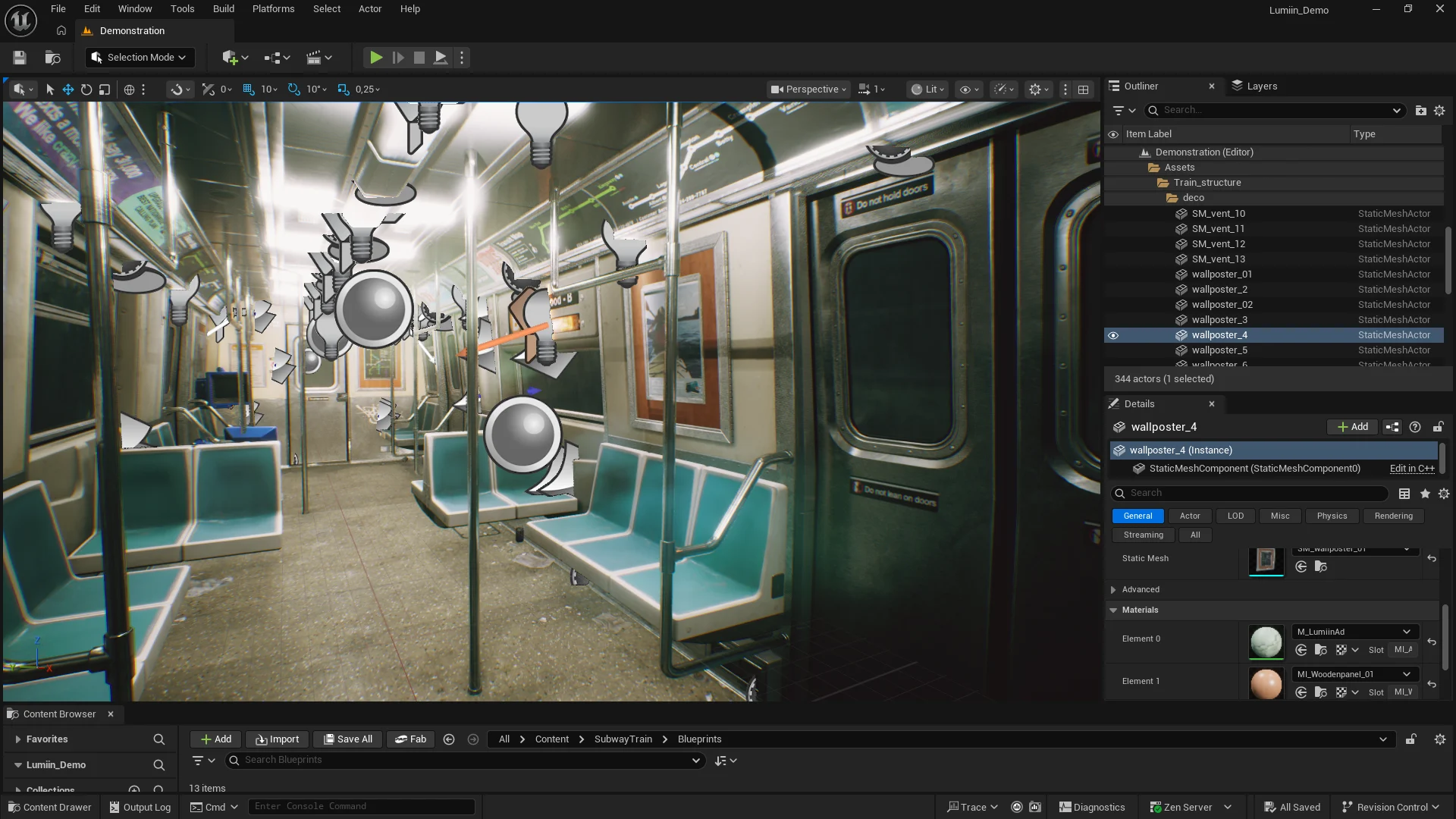
The first placement test inside the scene
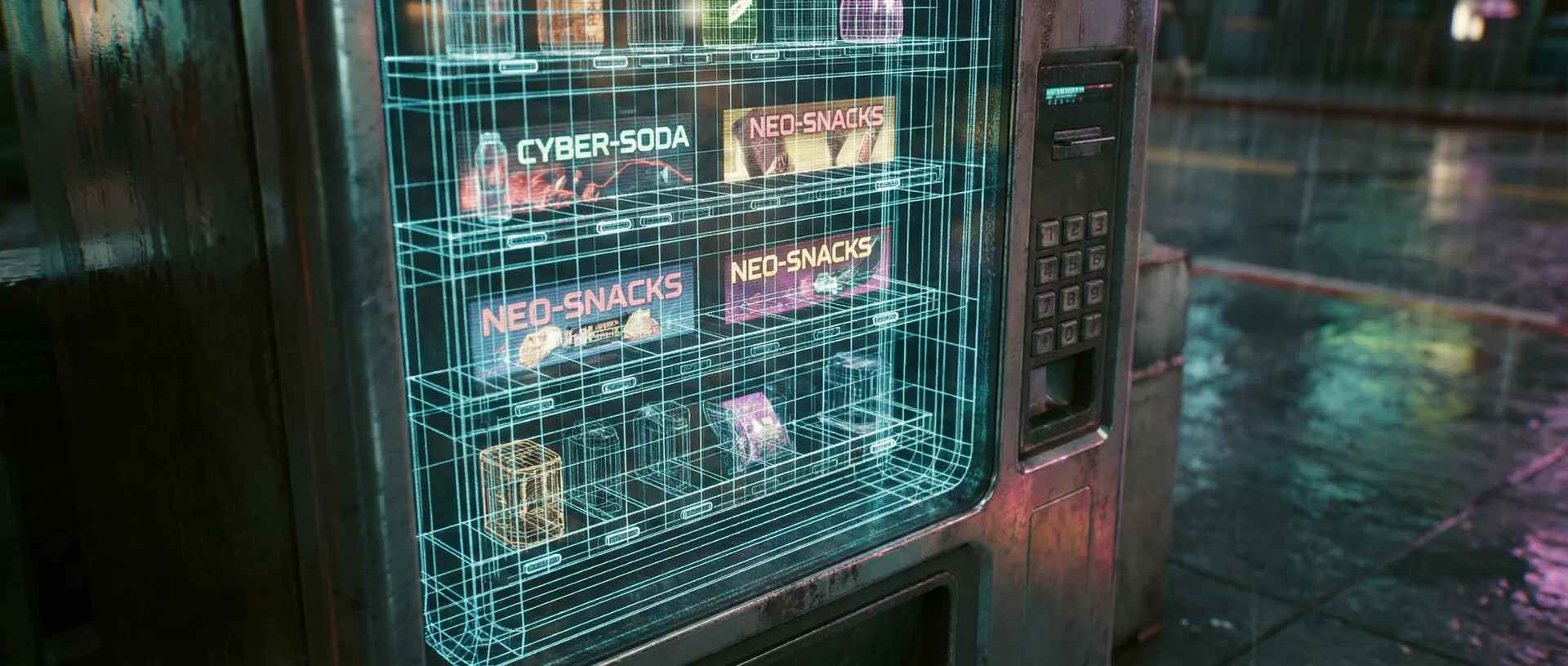
This early example scene shows one of the first Lumiin placement tests directly in Unreal Editor. Advertising surfaces are prepared as parts of the game world, where developers control placement, material and context.
Seven modules, one shared working context
The modules have distinct responsibilities while sharing organisations, roles, projects and controlled connections. Orpheus is not a collection of separate apps.
Eurydike
Manages assets, metadata, versions, revisions, proxies, approvals, external uploads and connected storage.
Elysium
Keeps sensitive originals and confidential content in specially protected access and sharing contexts.
Aion
Connects projects, tasks, calendars, sprints, timelines, dependencies and production planning.
Chiron
Edits content in the context of its assets, revisions, projects and approvals. Specialist tools such as Helios belong here.
Themis
Connects customers, contacts, contracts, documents, people processes, services and invoices with creative work.
Icarus
Keeps messages and files with the projects, assets, customers, tasks and dates they belong to.
Iris
Brings media libraries, playback and controlled presentations to webOS, Android TV and Fire TV.
Existing storage and tools remain part of the workflow
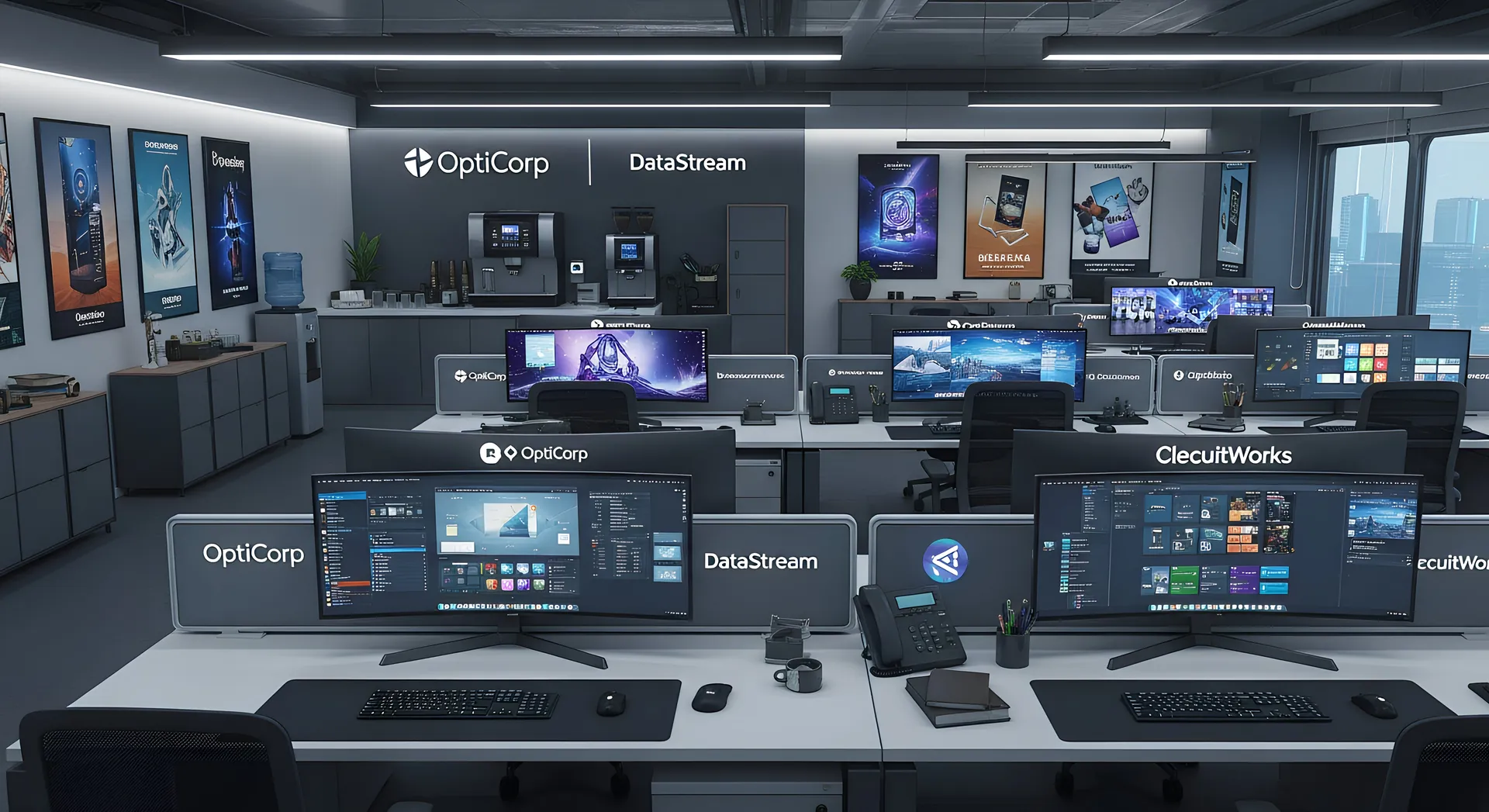
Orpheus organises work in separate organisations and workspaces. Roles control access while storage and services are connected deliberately.
Eurydike can bring local and external storage into a shared asset context.
Connectors link established creative tools with assets, revisions and approvals.
Iris extends the same media context to presentation and TV devices.
One foundation for every module
Organisations, roles and rights
Tenants, workspaces and module-level permissions keep internal and external collaboration controlled.
Revisions and provenance
Versions, edits, origin and approvals remain traceable instead of disappearing into file copies.
Hosted or self-hosted
Orpheus can run as a hosted platform or in an agreed self-hosting scenario.
Open connectivity
Storage, identities and specialist services can connect to the working context.

Working context becomes delivery
Lumiin uses approved assets and campaign context from Orpheus. Jeeezy uses Orpheus as its developer backend for games, releases and commercial operations. lyr.me adds controlled links and hand-offs.
Orpheus remains the operating centre without blurring the distinct roles of the other products.
A connected workspace in three steps
Define access and operation
We align the organisation, hosting, self-hosting and contractual requirements with you.
Connect the context
Set up workspaces, roles, storage and the modules your team actually needs.
Work end to end
Connect assets, projects, communication, approvals and commercial processes without repeated hand-offs.
One price factor: your storage needs.
Every Orpheus feature is included in every plan. Users and modules do not change the plan price. Choose only the storage you need in Orpheus itself.
Fit Orpheus to your organisation
Open Orpheus in the portal or talk to us about access, modules, integrations, hosting and commercial requirements.